
Tag: music

  • The Roof Is On Fire

    Usually a famous sample gets used over and over again by a range of artists, but occasionally, multiple samples from the same track find their way into very different tracks by other people. Take Rock Master Scott & The Dynamic Three’s classic hip hop track from 1984: The Roof is on Fire.

    If I say “the roof is on fire” you’ll either chant along with the original, sing the mopey version in Fire Water Burn by the Bloodhound Gang from 1997, bounce to the 1998 song “Follow the Leader” by the Soca Boys, remember you danced to the 1989 dance track The roof is on fire by Westbam (which features a ton of other samples too), you may have headbanged to Sway by Coal Chamber from 1997 or if you’re really hardcore you remember Atari Teenage Riot using the lyrics in their 1999 track Anarchy 999. That or you heard the lines “the roof is on fire, we don’t need the water, let the motherfucker burn” in any other song that the Wiki article on the song mentions.

    And that’s kinda ironic, since The Roof Is On Fire was actually the B-side of the single that was intended as a hit song: Request Line. You may recognise the intro to that track as the same as that to Missy Elliot’s Work It from 2002. Somehow the simple but effective lyrics of the B-side found its way into pop culture and became just as standard for MC’s as “put your hands up for Detroit“.

    Even more ironic is the odd’s you will know yet another sample from The Roof is on Fire even though it completely ignores the famous lyrics involving lack of a fire department. Hey Girl Hey Boy by the Chemical Brothers from 1999 directly samples the opening of this original version of The Roof is on Fire.
    So hey girls and hey boys, we don’t need no water despite that The Roof is on Fire:
  • Mis-Teeq vs. Jim Bakkum – This Scandalous Love is Not Real

    Today a real whodunnit mystery in the series The Origin of Samples that seems to be forgotten by the internet, judging by the fact I can find very little info about this minor scandal in the world of pop music.

    In March 2003 R&B trio Mis-Teeq released the first single off their second album. The single was Scandalous (wiki) and was produced by the Stargate production team, who are also responsible for a ton of hits by Rihanna, Lindsey Lohan, Beyoncé and Ne-Yo. The song went on to become Mis-Teeq’s the biggest hit.

    Also in March 2003, the final of the first Dutch edition of Idols is held. The contestant coming in second is Jim Bakkum, who then still used ‘Jim’ as his artist name. Despite being the loser, he is quickly signed to Wilde Productions (owned by Phil Wilde, one of the creators of 2Unlimited) and releases a a few singles and an album Impressed. In July 2003 he releases his second single This Love is Real on BMG records.

    The song this Love Is Real is a cover of CB Milton‘s version of the song on his 1998 album From Here to There on Byte Records (owned by one of the men behind 2Unlimited: Jean-Paul De Coster). CB Milton got most famous for his songs Send me an Angel and It’s a Loving Thing produced by the guys behind 2Unlimited. CB Milton’s version was never released as a single, nor was the album it was on a major commercial success. The writers credited on the CB Milton version are Peter Bauwens and Phil Wilde of the production team Soundsational … and of Wilde Productions, the men behind 2Unlimited. On the Jim version Joey Balin is also credited as one of the writers, besides Wilde and Bauwens. If you listen to the CB Milton version, you’ll notice only the lyrics were covered.

    If you listen to Scandalous and This Love is Real (by Jim), you’ll notice than other than a slight pitch change, the instrumentation is nearly identical. In fact, this mashup might convince you:

    This scandalous love is not real (Mis-Teeq vs Jim) by The Nevis DJ

    So it looks like not only are the lyrics not original in the Jim track, neither is the music. Then again, if the music industry wants to quickly push out a hit single for their newest star baby, I guess this is what happens.  Now I do remember when this ‘scandal’ made it into the Dutch press back in 2003 someone did indeed find a link between the writers of both songs and that indeed someone had recycled some one’s idea, but nowhere on the web can I find a record of this. Tips are welcome. For now this remains a whodunnit ‘mis-teeq’ mystery.

  • Deee-Lite – Groove is in the Heart

    Groove is in the Heart by Deee-Lite is one of those songs that doesn’t have one original, but a whole string of originals that were sampled. In fact, only the vocals on that song are ‘original’. Still all the samples mashed together did indeed create something genuinely new. I’ll try to go through them in the order that they appear in the song.

    The opening is from a 1969 record entitled Music for Belly Dancing by (take deep breath) Bel-Sha-Zaar with Tommy Genapopoluis & The Grecian Knights. In the introduction track of the album Bel-Sha-Zaar explains some basic moves and tells you “We’re going to dance” (…) “and have some fun“.

    Enter Herbie Hancock’s Bring Down the Birds from 1966 with it’s characteristisc bass-loop. On top of that comes a drum loop from Vernon Burch’s Get Up from 1979. If you fast forward Get Up to 2:23, you’ll not only hear the drum loop but also the crazy flute sound you hear later on in Groove is in the Heart.

    When you hear Deee-lite’s singer Lady Miss Kier sing “I couldn’t ask for another“, the I is doubled with with I sung by actress Eva Gabor in the opening credits of the 1966 version of the tv-show Green Acres (“I get allergic smelling hay“).

    Lady Miss Kier starts singing the familiar lyric “Groove is in the heart” and if you listen closely you hear the high popping noises from Ralph MacDonald’s  Jam On The Groove (skip to 3:53) from 1976.

    Then before the next loop starts and a few times more in the song, you can catch the drum break opening from Ray Barretto’s  Right on Barreto Power from 1972. Just before rapper Q-tip from A Tribe Called Quest does his thing, the drum break is the opening break from Uptight by Billy Preston from 1966.

    Lastly, right after the break you can hear an odd mouth-sound, that comes from Hateful Head Helen’s self-titled Hateful Head Helen (skip to 3:06) from 1989. There’s a few more samples in there, mostly little sound effects (the scream/horn at 0:39, the shout at 2:27, the 1-2-3), but sadly my trusted source in these things, WhoSampled.com hasn’t got all of them.

    Combine all of them, add some vocals and there you have it: Deee-Lite – Groove is in the Heart

  • Ten Tips For Doing Something New

    I often hear a lot of musicians proclaiming they’re going to do something new. Usually it means they’re going to do something different and more specifically it means they’re just going to do something different for them. And sadly, often these musicians still only produce something similar to what they were already doing. I know, cause I’ve often too said I was going to do something new.

    Doing something authentically new in music is harder than it sounds (pun not intended). And though doing something different may lead to something new, there is no guaranteed success. And even then, when you have produced something really new, it might still be unlistenable avant-garde crap no one wants to hear. But regardless of this doing something new (or different) won’t happen if you stick to the same roads. Here’s a list of 10 things I can recommend you can try to make something truely new (or different):

    1. DO find new collaborators, people you have never worked with, people you don’t know. You can place ads on (local) websites or the local practice centre notice board. You can ask musical friends about people they work with. DON’T keep recruiting the same people you’ve worked with in all your previous bands.
    2. DO try to make music all by yourself, instead of relying on the time, effort, charity and genius of others. It will also allow you to work without compromise to something that’s uniquely yours. DON’T worry if you make music all by yourself, you won’t be able to play all the instruments live or all instruments at all. Think in possibilities, not restrictions. If need be you can always get in people later to help you out.
    3. DO try out new instruments. And by that I don’t mean buy a new guitar. Try a theremin. Try a weird plugin for your composing software. Skip the default settings on your instruments and try out all the knobs and settings. Especially if they’re not in the manual. Try some websites that lets you make weird noises. Sample noises you hear outside or on tv and find a musical application for it. Give yourself a challenge. It doesn’t mean you have to stop using your favourite instrument altogether, but realise there’s more things that make noise outside drums and guitars. Use them. DON’T form a default band that has one or two guitarists, a drummer, a bass-player and a lead-singer. And that includes adding one keyboard-player instead of a guitar. Trying to create something unique and new with that line-up is near-impossible. It’s been done for over 50 years.
    4. DO make piles and piles of unfinished, abandoned and/or failed experiments. Write any random idea for a song, lyric, tune or beat down or record it if possible. If necessary, just sing it into your phone’s memo recorder (if it has one). Failure is part of learning. When you’re low on inspiration or ideas, dust off these notes and recordings and sift through it. You might find that two or three bad, unfinished ideas you had on a Tuesday night, might actually make something quite brilliant when combined. DON’T try to record the final version of your Greatest Hits album on the first try. Even the Beatles wrote some crappy songs only collectors listen to these days. People will remember you for the greatest songs you made over period of time, not your failed experiments. Unless you’ve created a truly horrible monster.
    5. DO make music by trying out bits and pieces from different styles. Take things and ideas out of their original context and apply them to your style. If you love dubstep, but are used to playing metal, you might be the first to create dubstep metal. Or it might also sound like neither and be something new. Ever hear of throat singing? Arabic scales? It doesn’t mean you have to become a reggae artist when all you ever played was rock, but it doesn’t hurt to take a look in some one else’s kitchen. Try it and find out. DON’T assume or expect you’re doing something radically new, just cause you say you are. DON’T label your own music, because it will create false expectations anyhow. Even when asked, just give a vague description and others will label your music for you. Poorly. They will call you ‘rock’ or ‘techno’ or ‘folk’ or ‘electro’ even when you’re not. Don’t worry about it.
    6. DO discover new music, new styles, new musicians and new musical idols. If only for a month. Listen carefully why you feel their music is so special and figure out how to put those feeling and ideas into your own music. DON’T be a devoted fan of the same musician for longer than ten years. And certainly DON’T try to follow in their exact footsteps by copying their exact (style of) music note for note. They release a Greatest Hits after a while or usually move on to something new and so should you.
    7. DO explore new platforms to interact with fans directly, distribute music (Bandcamp, SoundCloud), connect with other musicians, create music and arrange gigs for yourself. And keep looking even after you found it. DON’T be on MySpace. It’s a shinking ship and just cause every other band is on it, means nothing. The audience is moving away from it. Also don’t try hard to get into all sorts of established music magazines or websites. Not to get noticed any how. Only hard-core music lovers and other musicians read those and if you really are hot shit, the magazines and sites will come to you.
    8. DO find new and unique venues to play. And by that I don’t mean some pub on the other side of town you’ve never been before. Is a friend opening an exhibition at an art-gallery? If you practice in your mom’s basement, why not organise your own gig there? Remember, the point is you get noticed by normal people who like the same things as you, not the few regulars who hang out at the music venues. Get noticed out of context. DON’T play at the same venues you’ve always played over and over again. It’s nice that the owner of your local practice center will let you host your demo release party there again, but after a while even your mom will stop coming to these gigs. No one new will simply show up just cause you posted a poster somewhere, when they have never heard of you. Only your fans will and how many of those have you got?
    9. DO organise your own hip events, perhaps in collaboration with other people or bands. Can’t get booked to a festival? Start your own. Create a buzz around this new thing you do, make it larger than just you. Become part of a scene, not just musically. Find people who like your kind of music and what bonds them, instead of making music that people you know might like. Let the scene inspire you. DON’T play band competitions or (televised) talent shows. The judges are usually hired to recruit what the organisers of some local festival or record label see fit as their opening act on the smallest stage they have or the next big thing to last for a month. As such they are usually not on the lookout for something new and innovative, but something that sounds a little different, but okay to an everyman audience. Unless that’s you, don’t be there. Also the other bands/artists will pretend to be nice, but meanwhile talking about how much you suck and they rawk. (Seriously, I’ve seen people do this). And you will start doing this too after a while, when you keep ending second or third without a prize. You were making music because you love it, not to please others or as a competitive sport, right?
    10. DO enjoy making music. Know that you can always be in a local blues/rock cover band who have no fans and/or do nothing new and still truly enjoy this (and some times even get paid). There is no shame in this or making a little money that way. If figuring out every solo by Van Halen in your bedroom is what you love doing, then do it. If you love playing the same songs over and over again then do it. If you love making avant-garde crap, do it. DON’T complain if you feel you can’t make something new,  no one wants to listen to your new thing or no one ever hears it. Don’t worry if no one will recognise your musical masterpiece, even after you die and it will be lost forever. You enjoyed it and that means it has served a purpose. Not everyone can be Mozart.
  • Fatboy Slim – the Rockafeller Skank

    I’ve touched upon the work of Fatboy Slim before. I actually don’t want to devote too many posts in this series to him (or Daft Punk or DJ Shadow for that matter), because that could go on forever. Suffice it to say, most of Norman Cook‘s work consists of copy-pasting other people’s work together to form something new, without actually adding any instruments or vocals himself. And there’s nothing wrong with that. But it can be annoying if you keep digging up the exact same originals.

    Take the massive 1998 hit The Rockafella Skank. If I say “Right about now …”, you say “the funk soul brother”! Cause you know the song. Or do you know the intro Lord Finesse did in 1997 on the song Vinyl Dog Vibe by The Vinyl Dogs? Cause that’s where the lines come from.

    You’ll also instantly recognise the Just Brothers’ Sliced Tomatoes from 1965 in the song.  In ’65 it was just a B-side, but it got promoted to single in 1973. And then it got sampled.

    Years before that, in 1960, a film entitled Beat Girl came out.  Apart from now legendary actor Christopher Lee, it also featured opening music by the John Barry Orchestra. Which you will also recognise as part of The Rockafeller Skank. If you think that tune sounds a lot like the guitar riff on James bond, you would be right. John Barry also scored the first James Bond film Dr. No two years later in 1962, even though it is credited to Monty Norman for legal reasons.

    That leaves one more sample: The Art of Noise’s version of Peter Gunn from 1986. The irony here is that The Art of Noise were pioneers in the use of samples. Not only is Peter Gunn a cover from the theme by Henry Mancini (who also did the Pink Panther theme) the late 1950’s detective series, it also uses a sample by Malcolm McLaren, though you got to listen really hard to hear that.

    So as you can understand, Idon’t really like to dig too much into Norman Cook’s back catalogue, cause it just becomes a very long who’s who in sampling history. All the samples put together and you get The Rockafeller Skank:

    (original video can’t be embeded sadly)

  • Slow it down … by 800%

    If you ever wanted to get into making atmospheric, ambient mood music that will blow even the most pretentious Coldplay out of the water, there’s a really simple trick to do that. The last few days on  SoundCloud, users having been posting songs that were time-stretched by 800% and the result is a beautiful soundscape you can listen to for hours. The interesting bit  though is that the songs they used for it are by Justin Bieber and Frank Sinatra. Listen to them and be amazed:

    J. BIEBZ – U SMILE 800% SLOWER by Shamantis

    Frank Sinatra – It Was A Very Good Year TIMESTRETCHED by unsignedhypenl

    Update: Make your own!

    ANd obviously there’s a rickroll version too:

    Update2:

    Slipknot turns into drone music:
    Wait and bleeeeeeeeeeed (800% pitchshift, Slipknot) by The Nevis DJ

  • Gianfranco & Gian Piero Reverberi – Nel Cimitero Di Tucson

    In 2006 the duo Gnarls Barkley (DJ Danger Mouse and Cee-Lo) released their first and biggest hit single: Crazy. Due to the immense popularity of the song, it soon got covered by countless artists (even a lovely theremin version). Most notable of the covers however is the version by The Violent Femmes in 2008. Notable because Gnarls Barkley covered the song Gone Daddy Gone by the Violent Femmes also in 2006. So they covered each other’s songs!

    DJ Danger Mouse got a lot of attention in 2004 when he released the Grey Album, a mashup between the Beatles album nicknamed’ ‘the White Album‘ and Jay-Z’s Black Album. So it comes as no surprise that even though the lyrics on Crazy are original, the music is sampled.

    In 1968 the film Django, Prepare a Coffin aka Preparati La Bara! aka Viva Django (not to be confused  with the rip-off Viva! Django from 1971) was released as a unofficial rip-off sequel to the film Django (1966). It was not uncommon in spaghetti western days to release a film that ripped title and main characters from other popular films as a cash in. The score however is original and written by brothers Gianfranco & Gian Piero Reverberi. You can hear a hint of the sample in the opening credits (which visually and musically are a rip-off from the style of James Bond opening credits), but if you fast forward to 2:30, you can hear Crazy in the original song titled Nel Cimitero Di Tucson (click here for just the song):

  • REM – Everybody Hurts

    I talked about clone songs a while back. There is yet another example from Dutch pop music that illustrates this point well.

    Around 1998/1999 car-brand Mitsubishi aired a TV-commercial that featured music by a temporarily formed duo called City to City. The band name references to the fact that both band members (Maarten van Praag and Sandro van Breemen) have a city in their last name. Not only is their band name quite appropriate for a car commercial, so is their first and only hit single: The Road Ahead (Miles of the Unknown).

    But if you listen to the song, the feeling creeps up on you, that you’ve heard this music before. Even the references to roads and cars somehow strike familiar. And you would be right. You might remember a video that (ironically) does not have a wide open road, but a traffic jam as its setting: R.E.M.‘s Everybody Hurts from 1993. Listen to both songs and you’ll notice: same instruments (especially the use of strings and percussion on the opening), same build-up, same mood, even almost the same melodies.

    The single The Road Ahead topped the Dutch charts for 4 weeks and was #4 of best sold singles in 1999. The band City to City won the Edison (Dutch equivalent of a Grammy) for Best National Newcomer for that year. They released two more singles which failed to achieve any similar result, before City to City effectively split in 2002 when one of the two members left the band. The song The Road Ahead still shows up in the annual Top 2000 (best songs of all time list, compiled with votes from the listeners of Radio 2), usually somewhere between #500 and #900.

    Here’s City to City – The Road Ahead:

    And just for comparison, here’s R.E.M. – Everybody Hurts:

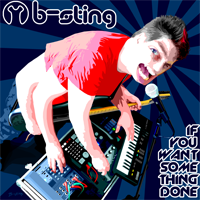
  • EP is out: If You Want Some Thing Done

    B-sting - If You Want Some Thing DoneThe EP If You Want Some Thing Done is out, get it here:

    music.b-sting.com

    You can determine the price for it yourself. Yes, that means you can get it for free, but contributions are welcome.

    If you like it, tell me! Or better yet, tell your friends. Review it, blog about it, drop the link on Facebook or Twitter, talk about it.

    Many thanks to Divadrummer for providing the opening track. If you would like to contribute something to the next release (opening track, remix, cover art, etc.) Let me know!

  • EP01 progress (3)

    The EP is done. The music is done. The artwork is done. The download page is done. Scheduled released date: this Saturday 31st of July 2010. People who subscribed for the free digital EP will be notified Saturday. The rest will just have to keep a close eye on B-sting.com .