
Tag: music

  • Is The Sign by Ace of Base about a neo-nazi?

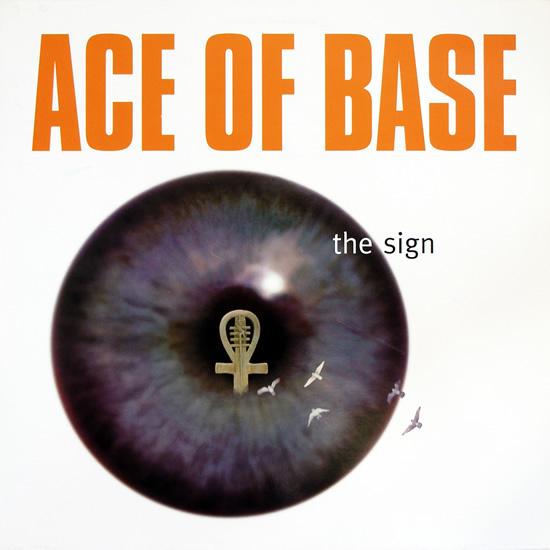
    Ace of Base - the SignThe Ace of Base song “The Sign” might be about a neo-nazi seeking redemption. I know I risk sounding like Quentin Tarantino explaining what Madonna’s “Like a Virgin” is about, when saying that. And I’m not saying it’s true, it’s just a theory that’s been playing in my head for a while. But why?

    The Sign is one of those nineties pop songs that seems simple enough. A girl sings that she she “saw the sign and it opened up her eyes” and she leaves the person who is suggested to be a bad influence on the main character. A lot of people assume “the sign” is just a metaphor for a red flag and that the main character in the song is getting out of a bad romantic relationship. The video for the song seems to support this with romantic imagery. But is it a romantic song?

    It’s well documented that Ace of Base member Ulf Ekberg made some unfortunate choices in his youth, by sympathising with anti-immigration groups and even playing in a neo-nazi band. He has stated publicly he had regrets that and closed that book of his past. And I believe him, because I think The Sign is actually about him, realizing he had hung out with the wrong friends and saying goodbye to them. Just look at the lyrics:

    • “I got a new life, you would hardly recognize me, I’m so glad” could be about closing that book on the dark past.
    • “How can a person like me care for you? I, why do I bother, when you’re not the one for me?” Apparently a friend or some one he looked up to drew him into this, but now he realises that that person never really cared for him.
    • “Is enough enough?” “Full is Full” is often a term used by anti-immigration groups to imply the country is full. Is enough enough could be a play on words, by throwing the racist words back at the racist.
    • “I saw the sign and it opened up my eyes” He got a hint and he realised what he was doing.
    • “Life is demanding without understanding“. Instead of understanding for the main character, this could be understanding for immigrants/other people and that it’s too demanding to hate on people all the time.
    • “No one’s gonna drag you up to get into the light where you belong. But where do you belong?” Note that this is aimed at “you”, not “I”. No one is going to put you in the spotlight where you (think you) belong. But does this other person belong there. The question mark seems to say: No, I doubt you do.

    If you re-listen to the song with that in mind, you’re listening to a completely and much more sinister song, albeit with a very happy ending still. There is however a really strong argument to be made that this is totally not about Ekberg’s bad youth: he didn’t write these lyrics (let alone sing them). His band mate Jonas ‘Joker’ Berggren wrote it. Of course it could still be he wrote it about Ekberg, but there’s also this line in the song (and this is where the theories get really crazy):

    • “I, under the pale moon, for so many years I wondered who you are“. Could be simply about wondering what makes his friend tick. But this could also be a very direct reference to a quote of The Joker in the first Batman film : “Ever dance with the devil in the pale moonlight?” The Joker from the film asks this before he shoots some ‘his prey’. As a joke. And the guy who wrote The Sign has ‘Joker’ as a nick name.

    Errr … what? Obviously, this is where I must stop making theories. So what do you think? Is the song just a silly pop song about happy departure from a bad ex-lover and is this just digging to deep into a simple song?
  • Gabber is dead

    In October 2010 I posted about Mid-Town’s Rotterdam shop closing on my personal blog. Last week however, the curtain dropped permanently for what was left of Mid-Town (the labels and webshop). They went bankrupt.

    What’s kind of interesting to see from the official papers, is that with Mid-Town some infamous labels also cease to exist: Rotterdam Records, DJ Paul Elstak’s Forze Records and Terror Trax Records.

    It’s sad to say but it’s the last in a long string of ‘gabber landmarks’ that have disappeared: the demise of the FFWD dance parade (also in 2010, while not strictly hardcore, usually had a large hardcore following), the radio program Turbulentie on the also bankrupt radio station Stads Radio Rotterdam over a decade ago and the infamous Parkzicht club. Like it or not these things were part of Rotterdam’s cultural heritage and something that gave Rotterdam a voice in the rest of the world.

    While a common slogan among gabbers is “hardcore will never die“, it can be concluded that gabber is dead. In Rotterdam at least. Or that it’s least a spirit without a body.

  • DIAY: Perfect, the music video

    Remember I released the song Perfect back in March (you can still download it for free here)? Well, it now has a music video I produced all by myself:

    The reason I made the video was to make a simple point: making music videos is something you can do all on your own. Just like you can do many things as a musicia/one-man-band yourself. I like to call it DIAY: Do It All Yourself. Granted, making it yourself means it won’t be as flashy and slick as one from a record label. And maybe it’s not something people will want to watch over and over. But actually creating something and putting it up on YouTube requires nearly zero budget.  The rest is creativity, resourcefulness and hard work.

    I’ll let you in on a secret. I shot this video with in one afternoon with just one camera. And not even a video camera, a digital still camera with video option (a Panasonic Lumix DMC-FS6 if you must know). I used a microphone stand as a tripod. No really. I planned out what I wanted to shoot and what shots I needed. Then just filmed myself like crazy. I edited al the shots together with Lightworks, a free video editing program. I’ll admit, it took me a weekend long of swearing and cursing to learn how it works and to get it to do what I want. But I did, and got a result. Kudos to the guys at Lightworks.

    Due to being busy with work and other stuff , it took me a month to complete, but if I’d add up all the hours I actually put into it, I think it could’ve been done in three 8-hour working days, maybe even two if you worked all day. I could’ve picked any of my songs, I picked the one that was currently easiest to make a video for at this moment. Plus now I have some practice and know what the possibilities and limitations are when I want to make something better. And I especially know to watch out for continuity errors now. LOL

  • Shocking Blue – Venus

    One of the biggest hits in the US by a Dutch artist is still Venus by Shocking Blue in 1969. It got re-popularized by the English girl-group Banarama when they covered it in 1986. In 1990 a ridiculous remix of Venus was released. The remix itself featured a few overused samples like Get up, Get Into It, Get Involved (1970) from James Brown, Think (1972) by Lynn Collins and Bring the Noise by Public Enemy (1987).

    Besides Bananarama it was also covered by Kirka in Finnish (1970), over-dramatically by Mina (1986), as a song about Jesus by ApologetiX (1998), by Singaporean singer Stefanie Sun (2002), by another Dutch band Krezip (2005) and even Jennifer Lopez did it for a razor blade commercial in 2010.

    But is Venus by Shocking Blue this week’s original? Nope, the song’s music is largely based on The Banjo Song by The Big 3 which included ‘Mama’ Cass Elliot who would later play in the Mama’s & the Pappa’s. But it goes even deeper. The Banjo Song itself is a very different musical arrangement around the lyrics of Oh! Susana by Stephen Foster which was originally released in 1848.  So in the end, Venus was based on the music from The Banjo Song which was based on the lyrics of Oh! Susana.

  • Edvard Grieg – In the Hall of the Mountain King

    Classical composer Edvar Grieg wrote In the Hall of the Mountain King for the play Peer Gynt which premiered in 1876. As such, it had a cinematic soundtrack quality to it, long before cinema became a broad popular pastime. Because of this it has long been a favorite background music for television and film. Most recently a rendition by Trent Reznor & Atticus Ross popped up on the award-winning soundtrack of The Social Network.

    A lot of musicians covered or sampled it, without it being specifically intended to accompany moving images. Notable covers are the versions by The Lancasters (titled Satan’s Holiday in 1965) ELO (1973), Apollo 100 as Mad Mountain King (1972) The Who (recorded in 1967, released in 1995), metal cello-quartet Apocalyptica (2000) and Epica (2009).

    But sampling it has been done quite a lot too. Whistle used the melody as a short hook in Just Buggin’ (1986). Master-sampler Coldcut featured a sample in Stop This Crazy Thing (1988) from (I think) the jazz-cover by Hugo Montenegro. Tango used it in the acid-track Can’t Stop the Rush. The song is among the classical tunes used in the title theme for the Sonic the Hedgehog-cartoon (1993). Vibes & Wishdokta used it in Motorway Madness (1996). A personal hardcore favorite: Juggernaut’s Ruffneck Rules da Artcore Scene (1996) Eurodance-artists Captain Jack used it in Dream a Dream (1999 and the 2009 version too). Delinquent Habits used it impressively in The Kind (1999). Most recently parts of it were used by Votchi in Unicorn (2004).

    As a bit of trivia, according to the Wikipedia-article the tune also served as the basis for the Inspector Gadget theme.

  • KLF – What Time Is Love?

    The KLF‘s track What Time Is Love (the Pure Trance 1 version) was originally released in 1988 and is an original acid house track. Their breakthru however came with a reworked version What Time Is Love (Live at Trancentral) in 1990. They described this track as “stadium house”. This version does however contain a few samples.

    The “I wanna see you sweat” sample comes from the track To the Bone by Wanda Dee released just 1 year earlier in 1989. Interestingly another sample from that track was used on the KLF’s Last Train to Transcentral.

    The KLF also used a sample of the MC5’s Kick out the Jams from 1969. This had a double meaning since The KLF had previously worked under the name The Justified Ancients of MuMu, which in turns was abreviated to The JAMs. There’s also a sample by Kraftwerk’s Home Computer (1981) hidden in the middle.

    After the  second release in 1990, the KLF also released a third version of the song entitled America: What Time Is Love? in 1991. This completely reworked version features a sample of Ace of Spades (1980) by Motörhead.

    In the wake of the three versions of the song followed a few interesting songs. The Ragga Twins sampled it in Wipe the Needle already in 1991. Scooter (sadly) sampled it not once, but twice in a song, like he pretty much rips off any dance track that was ever famous. In 1993 The God Machine made a industrial-metal cover.The most bizarre cover of the song is most certainly The Williams Fairey Brass Band cover of it in 1997. The KLF would later feature this on their Fuck the Millennium-single. Max Tundra has done a cover in 2006. Last but not least, The Kaiser Chiefs did a cover in 2006 for BBC Radio 1 and quite an excellent one at that.

  • Muzikantendag 2011

    I visited the Utrecht edition of the Muzikantendag and like previous years it was veeery interesting, especially when you don’t have the stress of dropping demo’s and just enjoying the lectures.

    The opening by veteran Henk Westbroek was inspiring and funny, much more so that I had suspected. It’s obvious he’s very used to the stage also when it comes to speaking out, giving a few stabs at the industry as well.

    Allan Eshuis had a few interesting things to say about composition, but got into a bit of a fierce debate with a member of the audience when the topic changed to publishing. But then Allan works for the majors and is hired for writing hits, not art. Though his opinion on sharing a little to get more isn’t that far fetched either. sounds very strategic and business-like though.

    He did however have a thing in common with veteran/poetic musician Thé Lau : they can both write a song around a single word that sounds great. In Thé Lau’s case he got famous for Blauw which turns out to be inspired by the blue tiles in a Greek restaurant. It turns out Thé Lau has quite an awesome encyclopedic knowledge of music too.  Respect!

    The Rock your English-session by Buffi Duberman was the most useful and fun of the day. She coaches Dutch bands to make their English lots less shitty both with regards to grammar and pronunciation. Apart from just having a very bubbly personality to look at, she also wraps it all up in fun games that actually get your mind going. I’m surely going to use a few of her ideas to better my English.

    Niels Aalberts (EHPO), Meindert Bussink & Claire van der Hall had a discussion on Promotion 2.0 which, knowing the parties involved boils down to the simple message: get a website, be your own warm self on Twitter and Facebook and KILL YOUR MYSPACE. You can never hear that message too often.

    Stefan Schmid from Zuco103 explained a little about how he produces and writes his music and how to find and keep the essence of a song, even though it’s changed on every side. Though I don’t agree with his remark that the sampling era is kinda over (pff, then I’ll just bring it back by myself!) and his style of music is not even close to mine, I do love people like him going off on these kind of musical expeditions and ending up with something that sounds great.

    To top my day off, I found a singer who was at an earlier edition of the Muzikantendag years ago and whom I had heard singing. I was so intrigued by her voice back then I was hitting myself over theh ead I had never figured out what band she was playing in. I got a card from her, turns out she’s in The Kroons. Ah, my mind is at ease now.

    Oh and on the way to the station ,unconnected to the Muzikantendag, there was a guerilla party going on for a dance festival. Dudes just parked  truck with speakers near the lawn and a crowd that was already gathered danced to it. A single policeman on a bike turned up and it was obvious there was nothing he could do to stop this. Lucky for him the guerilla gig by then was pretty much over anyhow and every one went home, including me. It was a great day for music.

  • The Soul Searchers – Ashley’s Roachclip

    The drum break in The Soul Searchers song Ashley’s Roachclip from 1974 was well on it’s way to become just as hugely sampled as the Amen break. But something stopped its triumphant march: it went out of fashion.

    Like many breaks, it was first used in hiphoptracks in the early eighties. A lot of early hip hop sampled the song at the 11-second mark, like Grandmaster Melle Mel and LL Cool J. Some artists, used the drum break, like Michee Mee & L.A. Luv in 1987 in Run For Cover. The first use of the sample that became famous was however was Eric B. & Rakim’s classic sample track Paid In Full from 1987.

    That may well have spurred on it’s sudden popularity, but not just in hiphop, but regular pop and dance music. The relaxed break suddenly popped up as a backing for Milli Vanilli’s 1988 songs Girl You Know It’s True and Baby, Don’t Forget My Number. Ice MC’s 1990 track Easy not only emulated Milli Vanilli, it also used the same sample. Snap!’s 1990 track Oops Up used the sample too. Interesting to note is that remixes of pop songs used it to make it more danceable, like Roxette’s The Look from 1989 and Caron Wheeler’s Livin The Light from 1990.

    The hits then just started to roll in. PM Dawn in 1991 with Set a Drift On Memory Bliss (which combines it with Spandau Ballet’s True), Unbelievable by EMF in 1991, Sweet Thing by Mick Jagger in 1992, Come Undone by Duran Duran in 1993. Even Moby used it in First Cool Hive from 1995.

    But from there it’s use in popular songs (chart hits in this case) kinda ended. Even though it is still often sampled and used in various ways since then. It seems the beat has become associated with those late 80’s/early 90’s hits and become somewhat unpopular with producers. That and the fact that most people used it ‘as is’ and didn’t slice it up, like it was done with Amen break.

  • Isley Brothers – Footsteps in the Dark

    In 1977 the Isley Brothers released the album Go For Your Guns. Track 2 on that album is the very laid back song Footsteps in the Dark. Three songs were released as singles from that album, but Footsteps in the Dark was not one of them. Nevertheless, the song has gained popularity among hiphop and R&B artists as a source for samples.

    The main reason for this is that Ice Cube sampled the laid back riff in his 1993 track It Was a Good Day and the song became a big hit. It describes a good day in South Central without a single incident, sort of hinting that those days are rare, from a gangsta rapper’s point of view. Since then the track has been sampled countless times, too many to mention here (WhoSampled has a good overview).

    But what’s interesting however is that Ice Cube wasn’t actually the first to use it. Fellow West-Coast gangsta rappers Compton’s Most Wanted released their second album Straight Checkn’ Em in 1991. On it is the track Can I Kill It. Even though it starts out leaning on a sample of Teddy Pendergrass track Love T.K.O. from 1980, halfway it switches samples to the now famous sample of the Isley Brothers. So it’s not completely unlikely that the inspiration to use the sample in It was a Good Day actually came from another West-Coast track.