
Category: notes of interest

  • Is The Sign by Ace of Base about a neo-nazi?

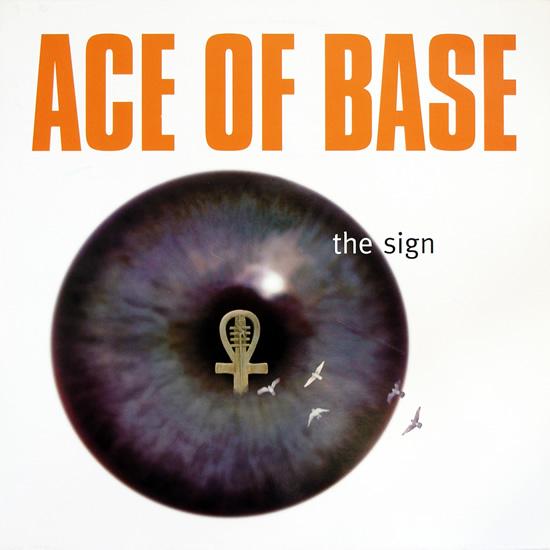
    Ace of Base - the SignThe Ace of Base song “The Sign” might be about a neo-nazi seeking redemption. I know I risk sounding like Quentin Tarantino explaining what Madonna’s “Like a Virgin” is about, when saying that. And I’m not saying it’s true, it’s just a theory that’s been playing in my head for a while. But why?

    The Sign is one of those nineties pop songs that seems simple enough. A girl sings that she she “saw the sign and it opened up her eyes” and she leaves the person who is suggested to be a bad influence on the main character. A lot of people assume “the sign” is just a metaphor for a red flag and that the main character in the song is getting out of a bad romantic relationship. The video for the song seems to support this with romantic imagery. But is it a romantic song?

    It’s well documented that Ace of Base member Ulf Ekberg made some unfortunate choices in his youth, by sympathising with anti-immigration groups and even playing in a neo-nazi band. He has stated publicly he had regrets that and closed that book of his past. And I believe him, because I think The Sign is actually about him, realizing he had hung out with the wrong friends and saying goodbye to them. Just look at the lyrics:

    • “I got a new life, you would hardly recognize me, I’m so glad” could be about closing that book on the dark past.
    • “How can a person like me care for you? I, why do I bother, when you’re not the one for me?” Apparently a friend or some one he looked up to drew him into this, but now he realises that that person never really cared for him.
    • “Is enough enough?” “Full is Full” is often a term used by anti-immigration groups to imply the country is full. Is enough enough could be a play on words, by throwing the racist words back at the racist.
    • “I saw the sign and it opened up my eyes” He got a hint and he realised what he was doing.
    • “Life is demanding without understanding“. Instead of understanding for the main character, this could be understanding for immigrants/other people and that it’s too demanding to hate on people all the time.
    • “No one’s gonna drag you up to get into the light where you belong. But where do you belong?” Note that this is aimed at “you”, not “I”. No one is going to put you in the spotlight where you (think you) belong. But does this other person belong there. The question mark seems to say: No, I doubt you do.

    If you re-listen to the song with that in mind, you’re listening to a completely and much more sinister song, albeit with a very happy ending still. There is however a really strong argument to be made that this is totally not about Ekberg’s bad youth: he didn’t write these lyrics (let alone sing them). His band mate Jonas ‘Joker’ Berggren wrote it. Of course it could still be he wrote it about Ekberg, but there’s also this line in the song (and this is where the theories get really crazy):

    • “I, under the pale moon, for so many years I wondered who you are“. Could be simply about wondering what makes his friend tick. But this could also be a very direct reference to a quote of The Joker in the first Batman film : “Ever dance with the devil in the pale moonlight?” The Joker from the film asks this before he shoots some ‘his prey’. As a joke. And the guy who wrote The Sign has ‘Joker’ as a nick name.

    Errr … what? Obviously, this is where I must stop making theories. So what do you think? Is the song just a silly pop song about happy departure from a bad ex-lover and is this just digging to deep into a simple song?

  • Why there are only 12 songs in most albums

    I noticed this question on ask.com: Why are there only 12 songs in most albums? Of course I tried to create an account there to answer the question, but since it failed, here’s my researched answer to that question.

    Most record deals from major labels require the artist to record an x amount of “albums”. The record deal usually clearly defines “an album” as being a musical recording that is 40 to 50 minutes long. You can see an example of it here (in the first clause) and here (paragraph 2d). Since most pop-songs are between 3 and 4 minutes, it has become an industry standard that this means about 12 songs (4 x 12 = 48 minutes).

    Artists that have more than 12 songs usually have short ‘in between’ or ‘intro’-tracks that are just between 30 seconds to 90 seconds, but often you’ll notice the total running time of the album is still between 40 and 50 minutes, like the contract specifies.

    The line that specifies it has to be 40 to 50 minutes prevents an artist by getting off easy by recording a 20 minute ‘album’, but also prevents the artist from recording an epic work that lasts 80 minutes, that the record company could have sold as two albums.

    So why 40 to 50 minutes? There’s no limit on how large a modern digital release can be. A cd can hold 74 minutes and in some cases 80 minutes of sound. There’s even an anecdote that the cd is 74 minutes long, because Sony executive Norio Ohga felt that the London Philharmonic Orchestra’s recording of Beethoven’s Ninth Symphony should fit exactly on one disc.

    But before the cd there was the vinyl LP which can hold only 22 minutes of recording on two sides, so a total of 44 minutes. The LP was the industry standard for the longest possible recording that would fit on one disc for 30 years from it’s introduction in 1948 until roughly the 1980s when the CD was introduced. As such the ‘album’ become synonymous with a 44 minute recording, even when the CD was introduced. In the beginning this was because ‘albums’ still had to be released on both LP and CD. CD’s did some times get bonus tracks, also to lure people to buy the more expensive CD.

    But over the years, the recording industry simply held onto the ‘standard’ 44 minutes and simply loosened the definition to somewhere between 40 and 50 minutes. Or like usually … 12 tracks.

  • Follow your dreams?

    If there’s one bit of solid advice I got in 2012 that I would like to share with you in 2013, is that you don’t have to chase dreams to be happy doing what you do. The advice was given in a comic by Maaike Hartjes (she makes great comics by the way, check out her stuff) that I’d like to share here:


  • Gabber is dead

    In October 2010 I posted about Mid-Town’s Rotterdam shop closing on my personal blog. Last week however, the curtain dropped permanently for what was left of Mid-Town (the labels and webshop). They went bankrupt.

    What’s kind of interesting to see from the official papers, is that with Mid-Town some infamous labels also cease to exist: Rotterdam Records, DJ Paul Elstak’s Forze Records and Terror Trax Records.

    It’s sad to say but it’s the last in a long string of ‘gabber landmarks’ that have disappeared: the demise of the FFWD dance parade (also in 2010, while not strictly hardcore, usually had a large hardcore following), the radio program Turbulentie on the also bankrupt radio station Stads Radio Rotterdam over a decade ago and the infamous Parkzicht club. Like it or not these things were part of Rotterdam’s cultural heritage and something that gave Rotterdam a voice in the rest of the world.

    While a common slogan among gabbers is “hardcore will never die“, it can be concluded that gabber is dead. In Rotterdam at least. Or that it’s least a spirit without a body.

  • Brushy One String

    Never fool yourself into thinking that extra, expensive high-tech production tools are a necessity to make a great music. Or worse that when you use these tools, a song is therefore great. I’ve personally seen musicians blowing money and obsess over recording and fine-tuning a certain guitar-section to its optimal sound quality, while the arrangement was hardly stood out in the song.

    A great song by passionate musician is a great song, no matter how you play it or what quality its recorded in. Brushy One String proves this point by displaying his vocal talents by just accompanying himself on a cheap, crappy-sounding, one-string guitar:

    He reminds me of local legend street-musician Carlos. He plays at the Lijnbaan in Rotterdam day in day out and always with a smile.

  • Everything is a Remix (4)

    YES! Kirby Ferguson finally released the final part (part 4) of his excellent series Everything is a Remix about how advances are made through copying, modifying and combining and current copyright and patent laws are starting to work against the flow. You can watch part 4 here, but if you haven’t seen the series yet, start at part 1.

  • Rotterdam: fight back

    Yet another Rotterdam venue is closing its doors. After medium sized venue Watt being dropped by the city council, the smaller ones are starting to fold. Waterfront was destroyed in the merger with Watt. Heidiger is gone. The FFWD dance parade was no longer welcome. Dizzy was closed, but luckily re-opening soon. But for how long? Rotown and Baroeg are the last small venues to hear live music.

    I saw this coming and this is why I decided to chose home-gigs as an alternative. But many Rotterdam musicians do not have that option.

    Maybe it’s time for the old model of illegal gigs in unlicensed locations to be put into use. Last put to use in a period where Rotterdam became synonymous with a genre of music: gabber. At least then all the voters who are responsible for the devastating culture policy of the city of Rotterdam, will have something to really complain about. Make some noise for Rotterdam.

    Bands and musicians of Rotterdam, I await your illegal rave flyers.

  • Nieuwe Electronische Waar

    Even though I hail from the South-West of the Netherlands, I was willing to travel all the way to the East of the country to go to a conference organised in Deventer by Nieuwe Electronische Waar (New Electronic Goods) next weekend. Master-classes in making electronic music, that sounds too perfect to be true. I didn’t even care that it would cost me three times more to get there compared to the ticket price. Or that it’s actually organised for musicians on the East side of the country. Why is there nothing like that around Rotterdam?!

    But as it turns out, I’m needed elsewhere that weekend. My services as server migration specialist are required at a client. IT-superhero by day, undercover DIAY electronic musician by night. No one said it would be easy.

  • Daphne Oram

    On NPR an awesome article (with sound) about the Oramics machine by Daphne Oram. Daphne Oram was a composer and innovative electronic musician who worked at BBC Radiophonic Workshop (which among others worked on the sounds for Doctor Who) and later started her own workshop. One of the devices she created was the Oramics machine, an early synth which didn’t have a keyboard or anything, nope you had to draw on it. It had been lost and Daphne Oram passed away a few years ago, until recently, the machine popped up again:

    I do recommend reading the article and listening to the interview at NPR too.

  • I am an artist

    The text on the left is from a t-shirt that can be purchased here. I have seen it going round on the internet among my many creative friends. And rightfully so. I know many of them have a hard time making ends meet doing what they love and what they do best.

    But there is an alternate strategy to follow as a musician. One that I personally follow. And I’m not alone.

    In the Dutch news paper NRC.next of July 28th (the one with their Lowlands supplement) there was a front-page article titled “Rock Star looking for part time job“. You can read the whole paper including the article here in Dutch (page 4 and 5 of the regular edition). The simple truth is that very little musicians in The Netherlands can pay the bills with just rawking out. Only big stars with a broad appeal and their face on tv regularly can actually make a living with it. Professional, trained musicians will often have teaching jobs in music or do a lot of session work (for the aforementioned big stars and their labels). But many indie artists will have a job on the side or more usually, they have a day job that pays the bills and making music is something that makes them an extra buck. Even though they would rather be doing that alone. You can’t get rich making music, let alone earn a living.

    But there’s an immense freedom in accepting you will not make (much) money  from what you love doing. It means you can do whatever you want, without fear of ending up in the gutter. You don’t have to please others for their money. Plus I take pride in the fact that I have skills outside music that some one is willing to pay me for. It does mean however that your productive out will be lower than most artists and you will have to plan your spare time more carefully. Or simply work less so you can spend more time on what you love doing. I did that. And it was the best choice I ever made.

    I’m not saying this will work for any creative endeavour, but you can invest on growing into a skilled artist who makes the art he/she wants and still live comfortably. Your audience will be smaller, your means a bit more limited, but the possibilities endless. You’re creative, figure it out! But please, if you ever run into some one who does work as a professional artist and is dependent on the money, please pay them. Pay them well. Or do something equally awesome (and of the same value) for them in return.