
Tag: links

  • Technotronic: how to sample yourself too

    I’ve talked about clone songs; when artists copy the style and sound of a song without using the actual notes and lyrics, for quick financial gain because of instant-recognition by the audience. Taking that up a notch is when it’s not other artists borrowing the sound, but the same artist makes nearly the same song twice.

    True, most artists have a recognisable ‘sound’. You can instantly recognise a U2 song, even when Bono isn’t singing. You might notice a gradual change in that sound making it easier to discern a song from the 80’s or 90’s. But most people will argue it’s not the same songs, unless you really hate the artist.

    But some times when an artist scores one hit single, the pressure is on (usually from the record company) to replicate that success and as fast as possible too. In the rush, the same song that brought success earlier is grabbed, some notes are rearranged and some new lyrics are written and hey presto the new hit single that sounds very recognisable.

    A very good example of this are Technotronic, because they didn’t do it just once but twice. Technotronic is a Belgian producer Jo Bogaert and an assortment of rappers who have lended their vocals for the tracks. In 1989 the hit Pump up the Jam came out of nowhere. For the video they used a girl to lip sync over Ya Kid K‘s vocals. Interestingly though a year before in 1988 one of the grand masters of house music, Farley Jackmaster Funk, released the track, The Acid Life. Undeniably, the music from Pump up the Jam is borrowed heavily from The Acid Life and should be considered ‘The Original’.

    Since Pump up the Jam did so well, a string of single was released in 1990. The first two following Pump up the Jam were Get Up! and This Beat is Technotronic. If you listen to those three songs in sequence and ignore the lyrics, you notice the instrumentation, the buildup, nearly everything is identical. So much so, that there’s a video on YouTube that is labelled as Pump up the Jam but is ‘clearly’ Get Up! . And even though This Beat is Technotronic contains a male vocalist, you can still hear a female singer sing ‘Get Up’ in the song. Confusing innit?

    With the track Spin That Wheel, there finally became some variation in the music, but Technotronic was now named Hi Tek 3 (same vocalists, same producer). When they went back to using Technotronic, they finally used a totally different sounding song: Rocking over the Beat (all still in 1990!). But by now, Technotronics triumph parade was over. Technotronic has kept releasing singles well until 2005, including a Megamix and a remix of their Greatest Hits every few years. Or should I say Greatest Hit?

    Still, a lot of artist are considered one hit wonders. At least Technotronic became a one hit wonder with three songs, including this one: Technotronic – Pump up the Jam:
  • Mis-Teeq vs. Jim Bakkum – This Scandalous Love is Not Real

    Today a real whodunnit mystery in the series The Origin of Samples that seems to be forgotten by the internet, judging by the fact I can find very little info about this minor scandal in the world of pop music.

    In March 2003 R&B trio Mis-Teeq released the first single off their second album. The single was Scandalous (wiki) and was produced by the Stargate production team, who are also responsible for a ton of hits by Rihanna, Lindsey Lohan, Beyoncé and Ne-Yo. The song went on to become Mis-Teeq’s the biggest hit.

    Also in March 2003, the final of the first Dutch edition of Idols is held. The contestant coming in second is Jim Bakkum, who then still used ‘Jim’ as his artist name. Despite being the loser, he is quickly signed to Wilde Productions (owned by Phil Wilde, one of the creators of 2Unlimited) and releases a a few singles and an album Impressed. In July 2003 he releases his second single This Love is Real on BMG records.

    The song this Love Is Real is a cover of CB Milton‘s version of the song on his 1998 album From Here to There on Byte Records (owned by one of the men behind 2Unlimited: Jean-Paul De Coster). CB Milton got most famous for his songs Send me an Angel and It’s a Loving Thing produced by the guys behind 2Unlimited. CB Milton’s version was never released as a single, nor was the album it was on a major commercial success. The writers credited on the CB Milton version are Peter Bauwens and Phil Wilde of the production team Soundsational … and of Wilde Productions, the men behind 2Unlimited. On the Jim version Joey Balin is also credited as one of the writers, besides Wilde and Bauwens. If you listen to the CB Milton version, you’ll notice only the lyrics were covered.

    If you listen to Scandalous and This Love is Real (by Jim), you’ll notice than other than a slight pitch change, the instrumentation is nearly identical. In fact, this mashup might convince you:

    This scandalous love is not real (Mis-Teeq vs Jim) by The Nevis DJ

    So it looks like not only are the lyrics not original in the Jim track, neither is the music. Then again, if the music industry wants to quickly push out a hit single for their newest star baby, I guess this is what happens.  Now I do remember when this ‘scandal’ made it into the Dutch press back in 2003 someone did indeed find a link between the writers of both songs and that indeed someone had recycled some one’s idea, but nowhere on the web can I find a record of this. Tips are welcome. For now this remains a whodunnit ‘mis-teeq’ mystery.

  • Chi-Lites – Are You My Woman

    In 1970 a soul group from Chicago called the Chi-Lites (formerly the Hi-Lites with an added C from Chicago) released the single Are You My woman (Tell Me So). Though it did chart in the US, the Chi-Lites wouldn’t score any big hits till a year later.

    In the early days 90’s, DJ Polo dug up the the track in 1992 for #1 With a Bullet by Kool G. Rap & DJ Polo featuring Big Daddy Kane. The sample serves no greater purpose in the track and again went mostly unnoticed.

    It didn’t crash into the main-stream until the Beyonce & Jay-Z collaboration Crazy in Love was released in 2003. It became a huge hit and as always that’s followed by a string of very differing covers like those from The Puppini Sisters, Anthony & The Johnsons, Tracy Bonham and there’s even a version of the Beyonce song with Mandarin vocals instead of Jay-Z.

    Oddly though, all of them usually mimic the melody from the original Are you My Woman (Tell Me So) by the The Chi-Lites:

  • Fatboy Slim – the Rockafeller Skank

    I’ve touched upon the work of Fatboy Slim before. I actually don’t want to devote too many posts in this series to him (or Daft Punk or DJ Shadow for that matter), because that could go on forever. Suffice it to say, most of Norman Cook‘s work consists of copy-pasting other people’s work together to form something new, without actually adding any instruments or vocals himself. And there’s nothing wrong with that. But it can be annoying if you keep digging up the exact same originals.

    Take the massive 1998 hit The Rockafella Skank. If I say “Right about now …”, you say “the funk soul brother”! Cause you know the song. Or do you know the intro Lord Finesse did in 1997 on the song Vinyl Dog Vibe by The Vinyl Dogs? Cause that’s where the lines come from.

    You’ll also instantly recognise the Just Brothers’ Sliced Tomatoes from 1965 in the song.  In ’65 it was just a B-side, but it got promoted to single in 1973. And then it got sampled.

    Years before that, in 1960, a film entitled Beat Girl came out.  Apart from now legendary actor Christopher Lee, it also featured opening music by the John Barry Orchestra. Which you will also recognise as part of The Rockafeller Skank. If you think that tune sounds a lot like the guitar riff on James bond, you would be right. John Barry also scored the first James Bond film Dr. No two years later in 1962, even though it is credited to Monty Norman for legal reasons.

    That leaves one more sample: The Art of Noise’s version of Peter Gunn from 1986. The irony here is that The Art of Noise were pioneers in the use of samples. Not only is Peter Gunn a cover from the theme by Henry Mancini (who also did the Pink Panther theme) the late 1950’s detective series, it also uses a sample by Malcolm McLaren, though you got to listen really hard to hear that.

    So as you can understand, Idon’t really like to dig too much into Norman Cook’s back catalogue, cause it just becomes a very long who’s who in sampling history. All the samples put together and you get The Rockafeller Skank:

    (original video can’t be embeded sadly)

  • Gianfranco & Gian Piero Reverberi – Nel Cimitero Di Tucson

    In 2006 the duo Gnarls Barkley (DJ Danger Mouse and Cee-Lo) released their first and biggest hit single: Crazy. Due to the immense popularity of the song, it soon got covered by countless artists (even a lovely theremin version). Most notable of the covers however is the version by The Violent Femmes in 2008. Notable because Gnarls Barkley covered the song Gone Daddy Gone by the Violent Femmes also in 2006. So they covered each other’s songs!

    DJ Danger Mouse got a lot of attention in 2004 when he released the Grey Album, a mashup between the Beatles album nicknamed’ ‘the White Album‘ and Jay-Z’s Black Album. So it comes as no surprise that even though the lyrics on Crazy are original, the music is sampled.

    In 1968 the film Django, Prepare a Coffin aka Preparati La Bara! aka Viva Django (not to be confused  with the rip-off Viva! Django from 1971) was released as a unofficial rip-off sequel to the film Django (1966). It was not uncommon in spaghetti western days to release a film that ripped title and main characters from other popular films as a cash in. The score however is original and written by brothers Gianfranco & Gian Piero Reverberi. You can hear a hint of the sample in the opening credits (which visually and musically are a rip-off from the style of James Bond opening credits), but if you fast forward to 2:30, you can hear Crazy in the original song titled Nel Cimitero Di Tucson (click here for just the song):

  • REM – Everybody Hurts

    I talked about clone songs a while back. There is yet another example from Dutch pop music that illustrates this point well.

    Around 1998/1999 car-brand Mitsubishi aired a TV-commercial that featured music by a temporarily formed duo called City to City. The band name references to the fact that both band members (Maarten van Praag and Sandro van Breemen) have a city in their last name. Not only is their band name quite appropriate for a car commercial, so is their first and only hit single: The Road Ahead (Miles of the Unknown).

    But if you listen to the song, the feeling creeps up on you, that you’ve heard this music before. Even the references to roads and cars somehow strike familiar. And you would be right. You might remember a video that (ironically) does not have a wide open road, but a traffic jam as its setting: R.E.M.‘s Everybody Hurts from 1993. Listen to both songs and you’ll notice: same instruments (especially the use of strings and percussion on the opening), same build-up, same mood, even almost the same melodies.

    The single The Road Ahead topped the Dutch charts for 4 weeks and was #4 of best sold singles in 1999. The band City to City won the Edison (Dutch equivalent of a Grammy) for Best National Newcomer for that year. They released two more singles which failed to achieve any similar result, before City to City effectively split in 2002 when one of the two members left the band. The song The Road Ahead still shows up in the annual Top 2000 (best songs of all time list, compiled with votes from the listeners of Radio 2), usually somewhere between #500 and #900.

    Here’s City to City – The Road Ahead:

    And just for comparison, here’s R.E.M. – Everybody Hurts:

  • Toontje Lager – Zoveel te doen

    In honour of the EP-release, this week a real simple Origin of Samples-post. The track So Much To Do uses samples from the band Toontje Lager. They were active in the early Eighties and score a few hits in The Netherlands. After they split up, their lead-singer went solo for a while, but eventually disappeared from public view. Apparently according to the Dutch wiki, he’s a music teacher now.

    The bits from one of their hits Zoveel te doen (which literally means So Much To Do) I used are a fairly small part of the song, but are locked into the Dutch collective memory for another reasons. The exact same bit was used a Dutch television program about cars in the Eighties: De Heilige Koe (The Holy Cow, aka: cars).

    Here’s the original Zoveel te Doen by Toontje Lager that reached #19 in the Dutch charts in 1983:

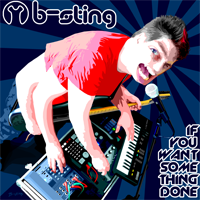
  • EP is out: If You Want Some Thing Done

    B-sting - If You Want Some Thing DoneThe EP If You Want Some Thing Done is out, get it here:

    music.b-sting.com

    You can determine the price for it yourself. Yes, that means you can get it for free, but contributions are welcome.

    If you like it, tell me! Or better yet, tell your friends. Review it, blog about it, drop the link on Facebook or Twitter, talk about it.

    Many thanks to Divadrummer for providing the opening track. If you would like to contribute something to the next release (opening track, remix, cover art, etc.) Let me know!

  • S.O.S. Band – Just Be Good To Me

    Recently on a popular music television station that mostly plays reality shows, I ran across the the song Just Be Good To Green by Professor Green featuring Lily Allen. It uses a familiar tactic of sampling part of the original and having the other part sung (in this case by Lily Allen) with slightly different lyrics.

    The sample and melody is lifted from the 1990 song Dub be Good to Me by Beats international. Norman Cook aka FatBoy Slimwas involved in producing the 1990 track Dub be Good to Me and that usually means samples come from all over the place. In this case the bass line from The Guns of Brixton by The Clash (1979), the harmonica tune from Once Upon a Time in the West, aka Man with a Harmonica (1969) and some of the rap vocals are directly taken from Johnny Dynell’s 1983 track Jam Hot. The Beats International version was subsequently also covered by Faithless featuring Dido in 2008.

    Dub be Good To Me however takes its melody and lyrics directly from yet another track. The S.O.S. Band‘s producers Jimmy Jam and Terry Lewis have been noted to popularise the sound of the 808. They also used it in the song which Norman Cook got this melody from: The S.O.S. Band – Just be Good to Me (1983). So is Lily Allen singing the tune of a song from 1990 or 1983?

  • The Delfonics – Ready or Not Here I Come

    The Delfonics are soul group who had their most successful period in the late sixties and early seventies. In 1968 they released a single entitled Ready or Not Here I Come. Though the Delfonics themselves weren’t on Motown, Motown’s own Jackson 5 covered the song in 1970.

    A few decades later in 1996 The Fugees released their album The Score and soon released the single Ready or Not from it. Despite the similar title, the song didn’t contain any direct sample from The Delfonics track. Instead Fugees’s singer Lauryn Hill borrowed most of the melody and lyrics from that track when she sang it. They were almost sued however, but not by The Delfonics, but Irish singer Enya, who’s track Boadicea was sampled quite clearly in the Fugees track. The matter was settled out of court and the song became a great international hit.

    Just a year later in 1997 A British DJ and Dutch vocalist scored a hit under the name The Score with their dance version of Ready or Not. You can wonder however whether they ever paid royalties to either The Delfonics, Enya or the Fugees. Here’s the original: The Delfonics – Ready or Not Here I Come: